The Symbol-Hunting Trap: Looking Beyond One Clue
The symbol-hunting trap turns a single object into a fixed answer. Read its setting, recurring motifs and visual context to build richer interpretations.

The most common mistake in interpreting a painting is to treat one recognisable object as a code with a single answer. The symbol-hunting trap can make a lively image feel like a puzzle already solved: a key means knowledge, a wilting flower means death, and everything else becomes decoration. A better reading asks how an object contributes to the image’s larger story, mood or pattern.
Recognising a familiar symbol can be a useful beginning, but it is not the same as understanding what an artwork is doing with it. Consider the setting, recurring motifs and cultural associations that may shape an object’s role. These routes do not produce a single master key; they help you build an interpretation that accounts for more of the painting.
Read the setting
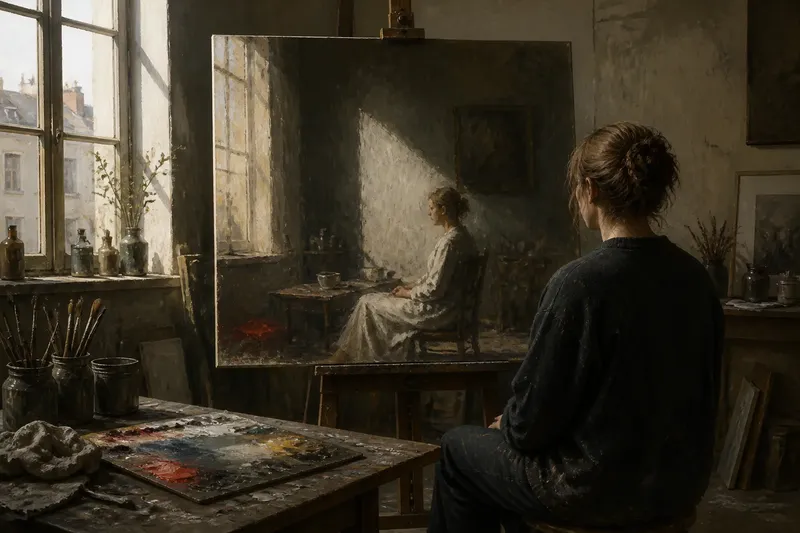
An object takes on a different character in different surroundings. A candle on a dinner table may belong to an ordinary evening; the same candle isolated in a dark room may suggest vigil, secrecy or fragile attention. The candle supplies a starting point, while the setting changes the mood around it.
Look at the room, landscape, furnishings and light. A richly arranged interior can invite questions about comfort, status or ritual, while a bare space may make one object feel unusually exposed. These are possibilities, not automatic meanings: a sparse room does not always signify loneliness, and a crowded one does not necessarily imply wealth.
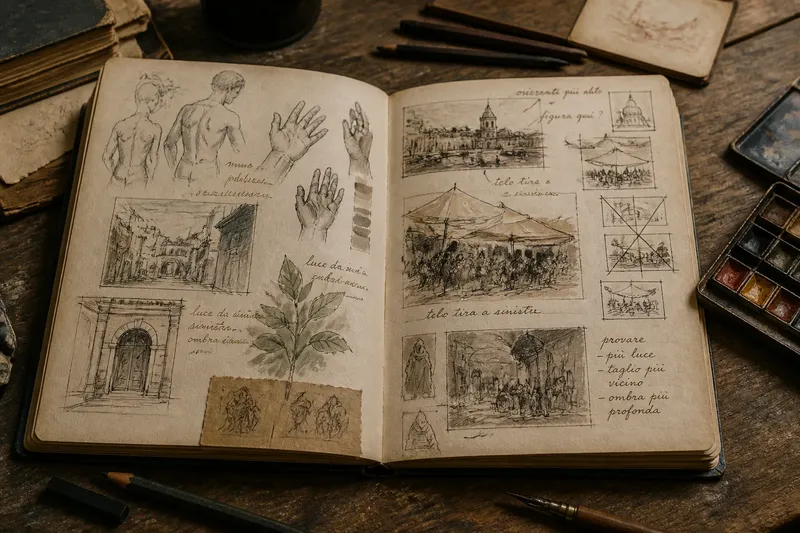
The setting can also tell you what sort of scene you are viewing. A fruit bowl, a skull and a burning candle arranged on a table may recall the traditions of still-life painting, where ordinary things can prompt reflection on time, mortality or worldly pleasures. That art-historical context gives the objects extra associations without requiring every apple or flame to stand for one fixed idea.
Trace recurring motifs
A detail that returns across an artwork can carry more weight than an eye-catching object that appears once. Look for recurring shapes, colours, gestures or materials. A pale oval might appear as a plate, a patch of sky and a highlight on a sleeve, linking parts of the composition or changing character as it reappears.
Repetition is a pattern to consider, not proof of a secret message. Compare the details: are they alike in colour, shape or position? Does one appearance interrupt the sequence? A repeated form that changes near a figure may draw attention to that moment, though the painting itself may leave the reason open.
This approach is useful in works with decorative motifs, patterned fabrics or repeated figures. It also helps when one object feels too ambiguous to interpret alone. A single bird may call up familiar associations; a group of birds moving from an enclosed room towards an open window offers a broader pattern to think about.
Consider cultural context
Symbols do not mean the same thing in every period or tradition. A crown might refer to royal authority in one setting, serve as a religious attribute in another, or function as a playful ornament in a contemporary image. The surrounding details and the artwork’s context help narrow the possibilities.
When an object seems to carry a specific historical or religious meaning, use reliable museum interpretation or an art-history reference to check your hunch. Treat that context as evidence to weigh, rather than a command to ignore what the image is doing in front of you. Artists can quote, alter or challenge established conventions.
Personal associations matter too, but they are different from shared cultural conventions. If a particular flower reminds you of someone, that response can deepen your experience without proving that the artist intended the same association. Keeping those kinds of meaning distinct lets you be both personal and careful.
Choose a reading route
Start with the approach that best fits the work, then use another to see whether your first impression holds up:
- If the setting feels distinctive, ask how the room, landscape or light changes the object’s role; if the surroundings seem incidental, shift attention to recurring forms or historical context.
- If a shape, colour or gesture returns, compare its appearances and note what changes; if the likeness is weak or isolated, avoid treating it as a meaningful pattern and examine the scene as a whole.
- If the image seems to quote a familiar tradition, check a trusted art-history or museum source; if the context remains uncertain, describe the association as a possibility rather than a fact.
- If your own memory supplies the strongest meaning, name it as a personal response; if you want to make a claim about the artist’s intention, look for evidence in the artwork or its context.
- If one interpretation explains most details but ignores a conspicuous feature, revise it to include that feature; if several readings still fit, allow the work to remain open-ended.
- If an object seems to have a familiar meaning, check whether its setting supports that association; if the surroundings point elsewhere, reconsider the symbol instead of forcing the standard reading.
Say you are looking at an invented painting of a woman beside a closed suitcase, with a small plant on the windowsill and a doorway behind her. You first connect the suitcase with travel. Then you notice that the plant leans towards the light and that the woman is turned towards the doorway. You check whether the painting contains other signs of departure, such as a road, a vehicle or travel clothes, and find none. The suitcase still makes travel plausible, but it no longer settles the scene: hesitation, waiting or a wish to leave also fit. The result is a more careful reading, with uncertainty left where the visible evidence does not choose one answer.
Questions readers ask?
Does a symbol have one fixed meaning?
Not necessarily. Familiar associations can provide a starting point, but an object’s setting, tradition and role in the image may complicate them. Treat a symbolic reading as one possibility to weigh, not a definition.
How can I check an art-historical association?
Look for interpretation from a museum, gallery or reputable art-history reference, especially when the object seems tied to a particular period or belief. Compare that information with the artwork rather than assuming that context explains every detail.
What if my personal response differs from the usual reading?
Your response can be meaningful without being the only intended one. Separate what the artwork visibly supports from what your own memories add, then consider how the two might sit alongside each other.
What if the image stays ambiguous?
Ambiguity is not a failure to understand. Keep the interpretations that account for the most of the image, and leave unresolved details open instead of inventing certainty.
Revise your interpretation
A strong interpretation can change as you notice more. If your idea depends on ignoring a recurring motif, a setting that alters the mood or a historical association, make room for that evidence. You need not settle every question; you do need to distinguish what the image supports from what you are supplying.
That is how to look beyond the symbol-hunting trap: let a familiar object lead you into the artwork, but do not make it speak alone. The symbol-hunting trap loses its hold when you treat context as part of the meaning, not as background scenery.